

If you want to see a shooting star this week, go outside after midnight on the night of Monday 16 into Tuesday 17 November or Tuesday 17 into Wednesday 18 November 2026. Find the darkest spot you safely can and give your eyes 20 to 30 minutes to adjust. That’s the Leonid meteor shower at its best, and all you need is a warm coat and some patience.
The bigger show comes next month. The Geminids peak on the night of 13 to 14 December, and this year a thin, early-setting Moon gives them almost ideal conditions.
Below we cover when to look from the UK and the US, why two nights are worth trying, and the simple steps that turn a cold wait into a few bright streaks. No telescope, no app and no kit needed.

Key takeaways
- Leonids: active 6 to 30 November. The best nights are 16–17 and 17–18 November 2026, after midnight local time.
- Moon: sets around 10 to 11pm on 16 November and 11:30pm to midnight on 17 November, so the small hours are dark.
- Geminids: best night 13–14 December, with 14–15 December worth a try too. Good from about 10pm.
- Kit: none. Binoculars and telescopes make meteors harder to see, not easier.
- Expect: a handful of Leonids an hour from a dark site, and many more Geminids. The rates quoted online assume perfect skies.
When is the Leonid meteor shower in 2026?
The Leonids run every year from about 6 to 30 November, when Earth passes through dust left behind by Comet 55P/Tempel-Tuttle. The peak is short, and the expert sources disagree slightly on which night it falls. That’s why we suggest trying both nights.
- The Royal Observatory Greenwich gives the UK maximum as the evening of 17 November into the early hours of 18 November (Royal Observatory Greenwich).
- The American Meteor Society and NASA both list the peak night as 16–17 November (AMS calendar, NASA).
- The International Meteor Organization (IMO) puts the main peak at about 23:45 UT on 17 November, which is 11:45pm in the UK. It also mentions weak encounters with older dust trails on 17 to 19 November that aren’t expected to produce anything dramatic (IMO 2026 calendar, PDF).
In practice both nights should be similar, so go out on whichever is clearer. If you miss both, Greenwich notes that the shower carries on at a lower rate for several days either side.
How many meteors will you see?
Not a storm, to be honest. The Leonids are famous for meteor storms, with thousands an hour in 1966 and again around 1999 to 2002, but those only happen when Earth crosses a dense trail of comet dust. The American Meteor Society says Earth isn’t expected to meet one of those until 2099.
The IMO’s “zenithal hourly rate” for 2026 is about 15, and Greenwich quotes 10 to 15 an hour. Those figures assume a perfectly dark sky with the shower’s radiant overhead. From a typical back garden you may see only a few an hour, and NASA’s 2026 fact box goes lower still: fewer than three an hour under dark skies.
What makes them worth the effort is speed. Leonids hit the atmosphere at about 70 km (44 miles) a second, among the fastest of any shower, so the ones you do see tend to be bright, and some leave a glowing trail for a second or two.
Leonids 2026: UK and US viewing times
The Leonids appear to stream from the “sickle” of the constellation Leo, which is low in the east in the late evening and climbs higher through the night. NASA’s advice is to start at about midnight local time and keep going until dawn.
The Moon is the other thing to plan around. It reaches first quarter on 17 November, so it’s fairly bright, but it sets before the best hours. These moonset times come from the US Naval Observatory:
| Place | Moonset, night of 16 Nov | Moonset, night of 17 Nov | Best window |
|---|---|---|---|
| London | 10:15pm GMT | 11:29pm GMT | Midnight to about 6am |
| Edinburgh | 10:12pm GMT | 11:32pm GMT | Midnight to about 6:30am |
| New York | 10:53pm EST | 11:56pm EST | Midnight to about 5:45am |
| Los Angeles | 11:09pm PST | 12:07am PST | 12:30am to about 5:30am |
The “best window” is our rounding: it ends roughly when dawn starts to brighten the sky (civil twilight begins at about 6:45am in London, 7:10am in Edinburgh, 6:15am in New York and 6am in Los Angeles). Elsewhere, use the nearest city as a guide, give or take half an hour.
How to watch a meteor shower: seven steps
You don’t need any equipment, and nothing here costs money. These steps work for the Leonids, the Geminids and every shower after.
- Check the forecast on the day. Cloud is the biggest risk in November and December. Look for a clear spell after midnight rather than a clear evening.
- Pick the darkest safe place you can reach. A back garden away from security lights is fine. A park, field or beach away from street lights is better. If you’re heading out in the small hours, go with someone and tell someone else where you’ll be.
- Dress for longer than you think. You’ll be sitting still for an hour or more, and it gets colder than it feels when you first step out. Layers, a hat, gloves and a hot drink all help.
- Get comfortable and lie back. A reclining garden chair, a camping mat or a sleeping bag on the ground is ideal. Meteors can appear anywhere, so you want as much sky in view as possible without straining your neck.
- Face the right way, but don’t stare at the radiant. NASA suggests lying with your feet towards the east and looking up. Meteors close to the radiant look short; ones further away look longer and more striking, so watch a dark patch of sky about a third of the way round from Leo.
- Give your eyes time and protect your night vision. Allow 20 to 30 minutes in the dark. Every glance at a bright phone screen resets the clock, so turn the brightness right down, use a red filter or night mode, or put the phone away. A red-light head torch is handy for getting to your spot.
- Stay at least an hour. Meteors come in clumps, with long quiet gaps in between. People who give up after ten minutes often see nothing.
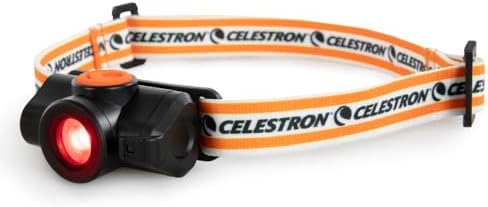
- PROTECT YOUR NIGHT VISION: Preserve your eyes’ dark adaptation while navigating your environment safely with this red-on…
- HANDS-FREE CONVENIENCE: Enjoy the freedom of hands-free illumination with this adjustable headlamp. It’s perfect for set…
- MULTIPLE LIGHT MODES: Seamlessly switch between two brightness levels (high and low), a blinking light, and an SOS setti…
Do you need a telescope or binoculars?
No. Both show only a tiny circle of sky, and meteors are too quick and unpredictable to catch that way. Your eyes take in a huge sweep of sky at once, which is exactly what you need. If you enjoy the night and want to go further, our beginner’s guide to astronomy covers what to look at next, and our guide to smart telescopes for beginners is there for when you’re ready for kit.
The rest of 2026: Geminids and Ursids
After the Leonids, two showers are left this year. One is usually the best of the year; the other is badly placed.
Geminids: 13 to 14 December
The American Meteor Society calls the Geminids “usually the strongest meteor shower of the year”, and 2026 looks like a good year for them. The AMS gives the peak night as 13–14 December, Greenwich gives 14 December (Royal Observatory Greenwich), and the IMO predicts the peak at about 14:00 UT on 14 December, which is daytime in the UK and US. That makes the nights either side, 13–14 and 14–15 December, the ones to aim for.
The Geminids differ from most showers in three useful ways:
- They start early. The AMS notes that Gemini is well placed from about 10pm, so you don’t have to stay up until the small hours, though activity still builds after midnight.
- They’re bright and slower. Greenwich describes them as multi-coloured: mainly white, some yellow and a few green, red and blue.
- The Moon will barely matter. On 13 December it’s a thin crescent (about 17% lit) that sets around 8pm in London and Edinburgh, 8:45pm in New York and 9pm in Los Angeles. On 14 December it sets about an hour later.
The IMO’s predicted rate under perfect skies is 150 an hour, and Greenwich notes the shower has been known to produce over 120 an hour at its peak. You won’t see that many in practice, but from a dark site you could realistically see dozens in an hour, and even from town you should see more than the Leonids. Lie back facing roughly east or south-east and look a little away from the bright stars Castor and Pollux, near where the meteors seem to come from.
The Geminids fall just before Christmas, so if there’s a stargazer in your family, our astronomy gift ideas might help.
Ursids: 21 to 22 December
The Ursids are a small shower that peaks just before Christmas, usually with only 5 to 10 meteors an hour according to the AMS. This year the Moon is about 89% lit on the peak night, which will wash most of them out. We’d treat any Ursid as a bonus rather than plan a night around it.
Frequently asked questions
What time is best to see the Leonids in 2026?
After midnight local time on the nights of 16–17 and 17–18 November, until the sky starts to brighten before dawn. By then the Moon has set and Leo is higher in the sky.
Can I see meteors from a city?
You can see the brightest ones, but far fewer. Even moving from a street-lit front garden to a darker back garden helps. If you can, head somewhere with no lights in your line of sight, and keep your eyes off your phone.
Which direction should I look?
Anywhere with plenty of open sky. For the Leonids, start by facing east, then look about a third of the way across the sky from Leo rather than straight at it. For the Geminids, face east or south-east from late evening.
Is a meteor shower the same as a meteor storm?
No. NASA defines a storm as at least 1,000 meteors an hour. The 2026 Leonids and Geminids are ordinary showers, which still means a good chance of seeing several bright meteors if you’re patient.
Your plan for this week
Check the cloud forecast for Monday and Tuesday night, pick the clearer one and set an alarm for midnight. Wrap up, lie back facing east, leave your phone in your pocket and give it an hour. Then put 13 December in your diary for the Geminids, with an early-setting Moon on our side.
Spot a light moving steadily across the sky instead? That’s probably a satellite, and our guide to tracking satellites and ISS flybys from your backyard explains what you’re seeing.
Written by The AIDailyShift Team. Facts checked against the official sources linked above on 15 November 2026.
Image credit: featured image is an illustrative AI-generated image created for AIDailyShift.
As an Amazon Associate, AIDailyShift earns from qualifying purchases.
Disclosure: Some links on this page are affiliate links. If you buy through them, AIDailyShift may earn a small commission at no extra cost to you. We only recommend tools we would use ourselves. Read our Affiliate Disclosure.
