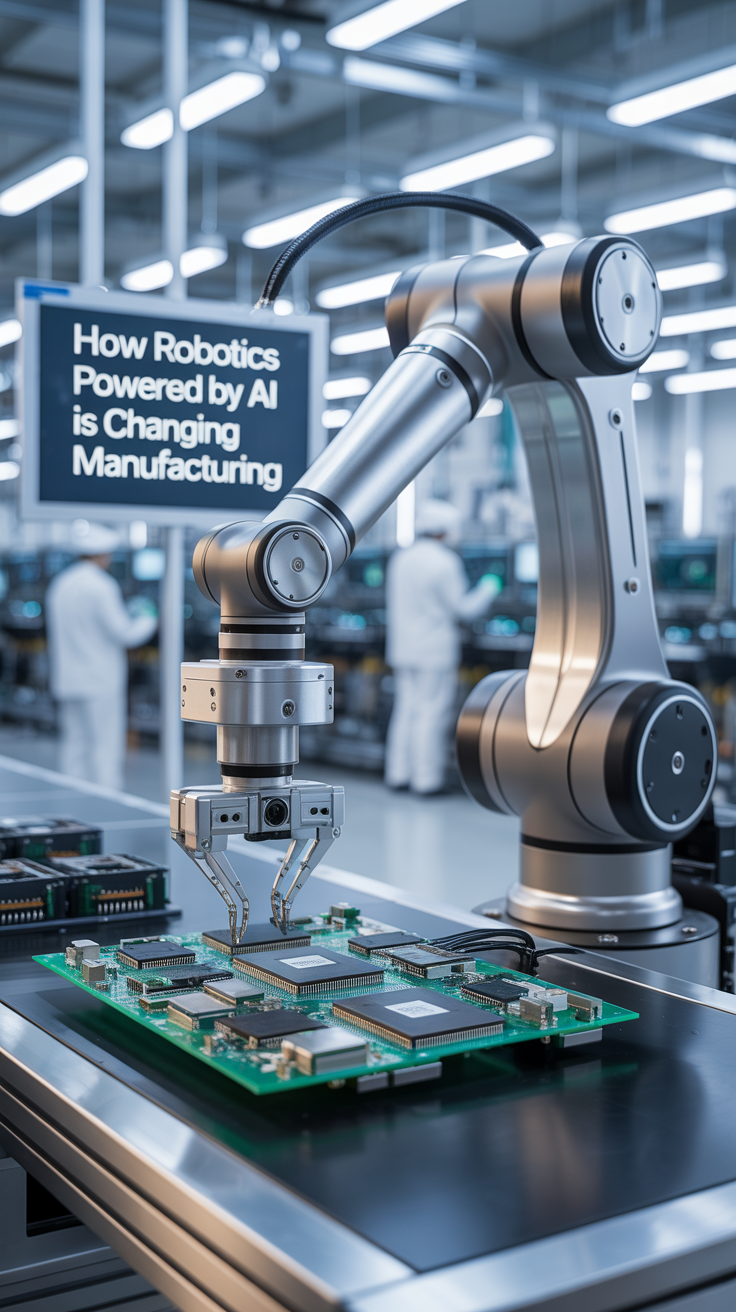
How Robotics Powered by AI is Changing Manufacturing
Introduction
Manufacturing has always been shaped by technology — from steam engines to assembly lines, and now, artificial intelligence. Today, AI-powered robotics are not only speeding up production but also making factories smarter, safer, and more efficient. This shift is transforming industries around the world, and it’s only the beginning.
From Traditional Robots to Smart Robots
Traditional factory robots have been around since the 1960s. They were great at repetitive tasks — welding, painting, or moving parts. But they lacked flexibility. If the process changed, the robot had to be reprogrammed from scratch.
With AI, modern robots are becoming adaptive and intelligent. Using machine learning, sensors, and computer vision, these robots can now:
- Recognize and sort different objects.
- Adjust to new production lines without heavy reprogramming.
- Collaborate with human workers safely (“cobots”).
The Benefits of AI-Powered Robotics
- Greater Efficiency
AI helps robots predict the best way to complete tasks, reducing waste and downtime. - Improved Quality Control
Robots with computer vision can spot defects on the production line that the human eye might miss. - Flexibility
Smart robots can handle small-batch or customized products, making manufacturing more adaptable to market trends. - Safety
AI robotics take on hazardous jobs, reducing the risk to human workers.
Real-World Examples
- Automotive Industry: Car makers like Tesla and BMW use AI-powered robots for welding, painting, and inspection.
- Electronics: Robots assemble delicate components in smartphones and circuit boards with precision.
- Food & Beverage: AI helps packaging robots adapt to different shapes and sizes without slowing down production.
The Future of AI Robotics in Manufacturing
As AI continues to improve, we’ll see:
- Predictive maintenance: Robots that can detect when they’re about to fail and fix themselves before breaking down.
- Smarter supply chains: AI linking robotics with logistics, ensuring raw materials and products flow smoothly.
- Hyper-personalized products: Factories adjusting on the fly to produce unique items for each customer.
Conclusion
AI-powered robotics are reshaping manufacturing into something faster, safer, and more innovative. From smarter quality checks to adaptive production lines, these machines are driving the next industrial revolution. For businesses, embracing this change isn’t just about keeping up — it’s about staying competitive in a world where technology never stops evolving.
💡 Related reading: How AI is Changing Everyday Gadgets in 2025 — see how artificial intelligence is shaping the devices we use at home and work.
Connect With Me!
I’d love to see what you’re growing!
Tag me on Pinterest or Facebook with your patio garden setup, or share your favorite low maintenance plants.
Let’s swap ideas and inspire each other — one small garden at a time.
“Need beginner-friendly stargazing gear?
👉Shop the Full Astronomy Gift List Here
👉 Subscribe Now — It’s free, and I only send cool stuff.
As an Amazon Associate, I earn from qualifying purchases. This does not affect your purchase price.