What Happens When Linux Fragments Into Ecosystems?
“Linux fragmentation” is often framed as a failure — too many distros, too many platforms, not enough standardisation. But that idea misunderstands what Linux actually is, and how successful technologies really scale.
Linux didn’t fragment because it was weak.
It fragmented because it was useful.
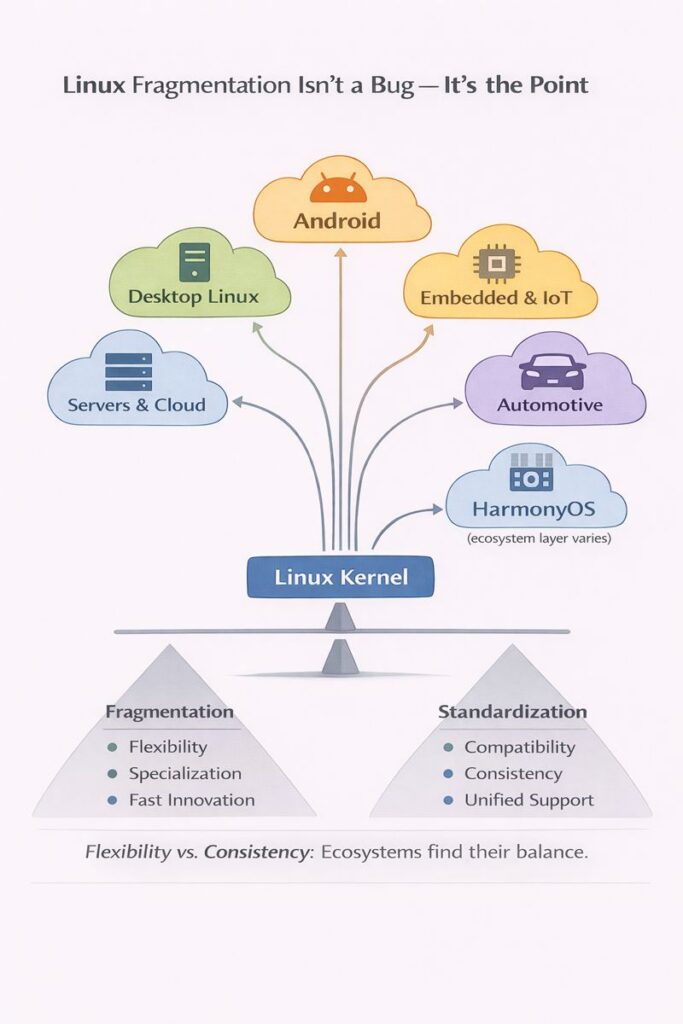
And once you see Linux as a foundation rather than a product, the rise of Android, HarmonyOS, and other ecosystems starts to look inevitable rather than chaotic.
Linux Was Never Meant to Be One Thing
At its core, Linux is not a complete operating system. It’s a kernel — the low-level layer that manages hardware, memory, and processes.
Everything else is optional.
That design choice is why Linux ended up:
- Running most of the internet
- Powering Android smartphones
- Embedded in routers, TVs, and cars
- Sitting underneath cloud platforms and AI infrastructure
Linux doesn’t compete by being uniform.
It wins by being adaptable.
Fragmentation Is How Linux Scales
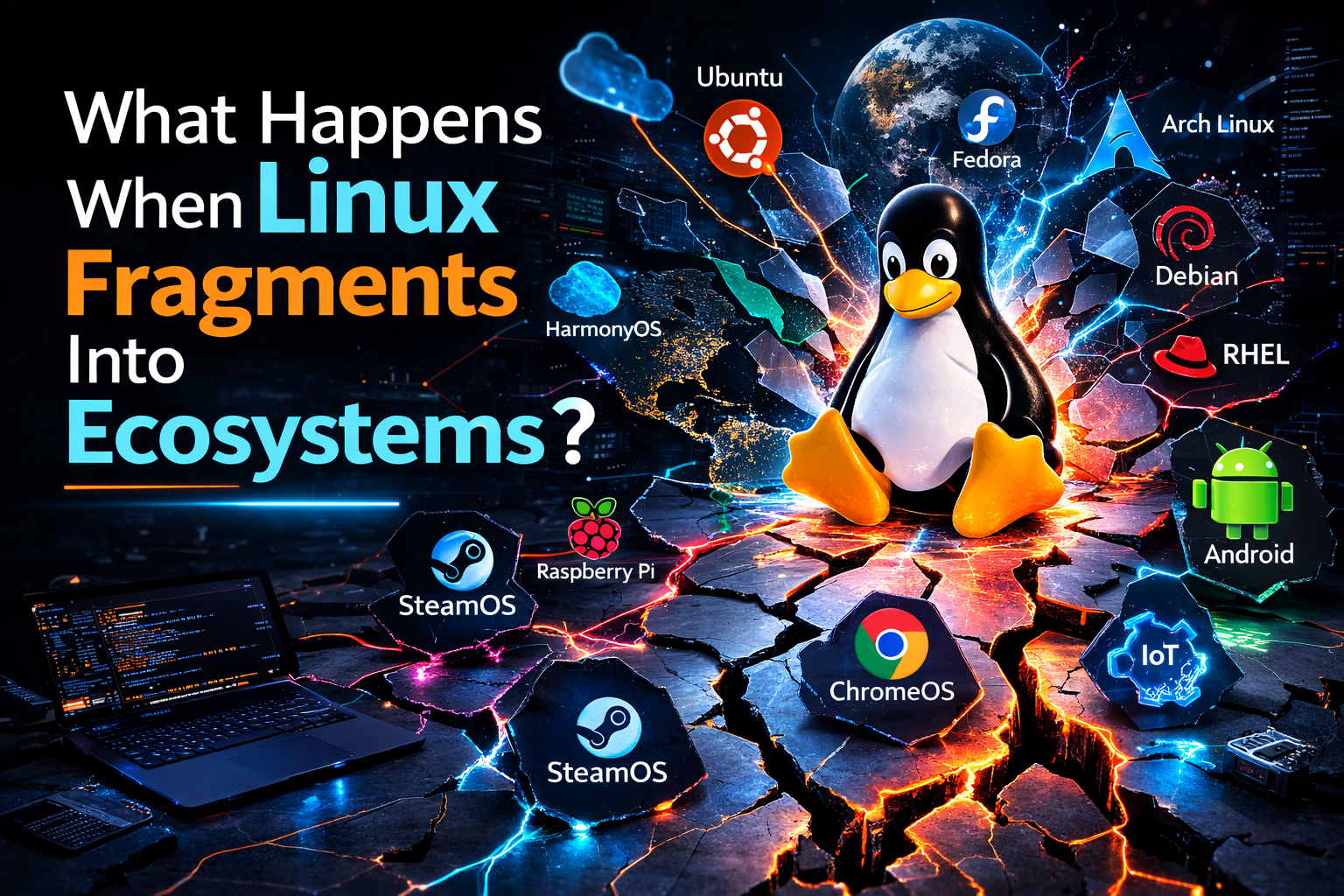
Instead of one “official” Linux OS, we got:
- Desktop distributions
- Server-focused builds
- Embedded Linux
- Mobile-first systems like Android
- Multi-device platforms like HarmonyOS
Each ecosystem made different trade-offs:
- Performance vs compatibility
- Openness vs control
- Flexibility vs polish
That diversity didn’t dilute Linux’s impact — it multiplied it.
This same pattern explains why Android could dominate phones while never replacing desktop Linux, and why HarmonyOS could emerge without killing Android.
Android: A Linux Ecosystem, Not a Monolith
Android is often treated as a singular platform, but it’s really just one interpretation of Linux.
Built on Linux, Android adds:
- A Java-based app runtime
- A mobile-first UI framework
- Hardware abstraction for phones
On top of that, Google layered its own proprietary services, creating a tightly controlled ecosystem experience.
This distinction — Linux vs ecosystem — is key. It’s explored in more detail here:
👉 Android Was Never Google — So Why HarmonyOS Matters
Android didn’t replace Linux.
It specialised it.
HarmonyOS Is Another Specialisation — With a Twist
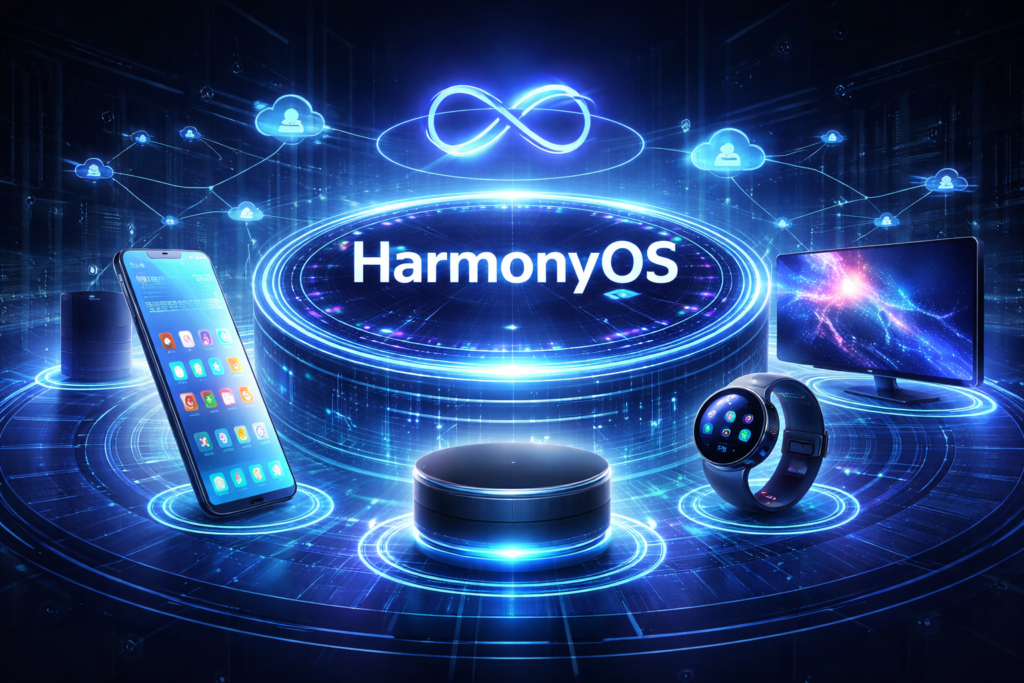
HarmonyOS, developed by Huawei, follows the same evolutionary logic — but aims at a different future.
Instead of specialising Linux for phones, HarmonyOS specialises it for:
- Multi-device coordination
- Distributed applications
- Cross-screen experiences
Where Android scaled outward from phones, HarmonyOS attempts to scale across devices from the start.
This isn’t fragmentation for fragmentation’s sake. It’s ecosystem divergence — the same thing that happened when Linux moved from servers into mobile.
The broader context for why this matters is covered in the pillar post:
👉 Why HarmonyOS Matters: Android, Linux, and the Future of Tech Competition
Fragmentation vs Control: The Real Trade-Off
Every Linux-based ecosystem faces the same tension:
- Openness enables innovation
- Control enables consistency
Android leans toward control at the service layer.
Desktop Linux leans toward openness.
HarmonyOS is experimenting with control across devices, not just apps.
None of these approaches are “wrong.”
They’re responses to different environments.
What matters is that Linux allows all of them to exist at once.
Why Fragmentation Doesn’t Kill Platforms Anymore
In the past, fragmentation could doom a platform. Today, ecosystems matter more than binaries.
What holds a platform together now is:
- Developer tooling
- App distribution
- Services and APIs
- Device integration
Linux provides the base.
Ecosystems provide the gravity.
That’s why HarmonyOS doesn’t need to replace Android to succeed. It only needs enough gravity to sustain its own ecosystem.
And the most important battleground for that gravity isn’t smartphones.
That future-facing competition is explored here:
👉 HarmonyOS vs Android: The Real Battle Isn’t Phones
Final Thoughts
Linux fragmentation isn’t a warning sign — it’s a growth pattern.
The same foundation that enabled Android to dominate mobile computing is now enabling HarmonyOS to explore new territory. Different goals, different ecosystems, same underlying logic.
When people ask whether Linux has fragmented too much, the better question is this:
Fragmented compared to what?
Because by every meaningful measure — servers, cloud, mobile, embedded systems — Linux already won.
Further Reading
If you want to explore this topic more deeply from different perspectives:
- Linux Foundation — open-source operating system fundamentals
- Android Open Source Project (AOSP) — how Android is structured beneath Google services
- Huawei Developer Documentation — HarmonyOS architecture and distributed design