Android Was Never Google — So Why HarmonyOS Matters
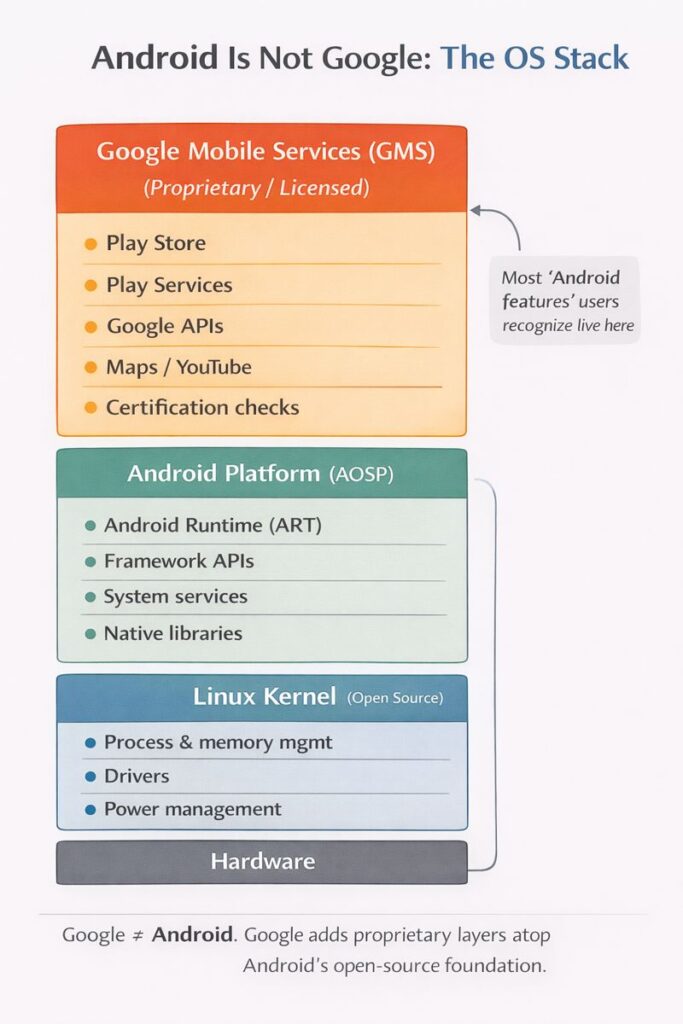
One of the biggest misunderstandings in modern tech is the idea that Android is Google.
It isn’t — and it never really was.
That confusion matters, because once you understand the difference between Android, Linux, and Google’s services, the rise of HarmonyOS suddenly makes a lot more sense. What looks like a political workaround is actually a long-term technical shift.
Android Is Built on Linux, Not Google
At the lowest level, Android runs on the Linux kernel. That kernel is open-source, widely used, and completely independent of Google.
On top of Linux sits AOSP (Android Open Source Project), which provides:
- Core system services
- Basic UI framework
- Hardware abstraction layers
This part of Android is not proprietary. Anyone can use it.
What most people experience as Android, though, lives above that layer.
Where Google’s Control Actually Lives
Google’s real power comes from services, not the operating system itself.
These include:
- Google Play Services
- Google Play Store
- Gmail, Maps, YouTube
- SafetyNet / Play Integrity APIs
These components are closed-source and licensed. Device manufacturers must meet Google’s requirements to include them.
This is why Android phones without Google services still technically run Android — they just lose access to the ecosystem most users expect.
Google doesn’t own Linux.
Google doesn’t fully own Android.
Google owns the experience layer.
This distinction is crucial.
Why Huawei Losing Google Didn’t Kill Android for Them
When Huawei lost access to Google services, it didn’t lose:
- Linux
- AOSP
- The ability to build smartphones
What it lost was:
- App distribution via Play Store
- Google APIs relied on by many Western apps
- Certification and ecosystem trust
Huawei initially leaned on Android without Google, but long-term that’s not enough. An OS without a strong ecosystem is just plumbing.
That’s where HarmonyOS enters the picture.
HarmonyOS Is a Strategic Response, Not a Fork
HarmonyOS, developed by Huawei, isn’t just “Android without Google.”
Early versions reused Android compatibility layers, but the long-term goal is different:
- A unified OS across devices
- A distributed architecture
- Independence from US-controlled service layers
This isn’t about replacing Android phone-for-phone.
It’s about owning the entire stack — hardware, OS, services, and ecosystem.
That broader context is explored in the pillar article here:
👉 Why HarmonyOS Matters: Android, Linux, and the Future of Tech Competition
The Linux Lesson Everyone Misses
Linux has never been a single operating system.
It’s a foundation:
- Android uses it one way
- Servers use it another
- Embedded systems use it differently
- HarmonyOS builds on it for multi-device coordination
Fragmentation didn’t weaken Linux. It allowed it to dominate everywhere quietly.
If that sounds familiar, it should.
The ecosystem-level implications of this are covered in the companion article:
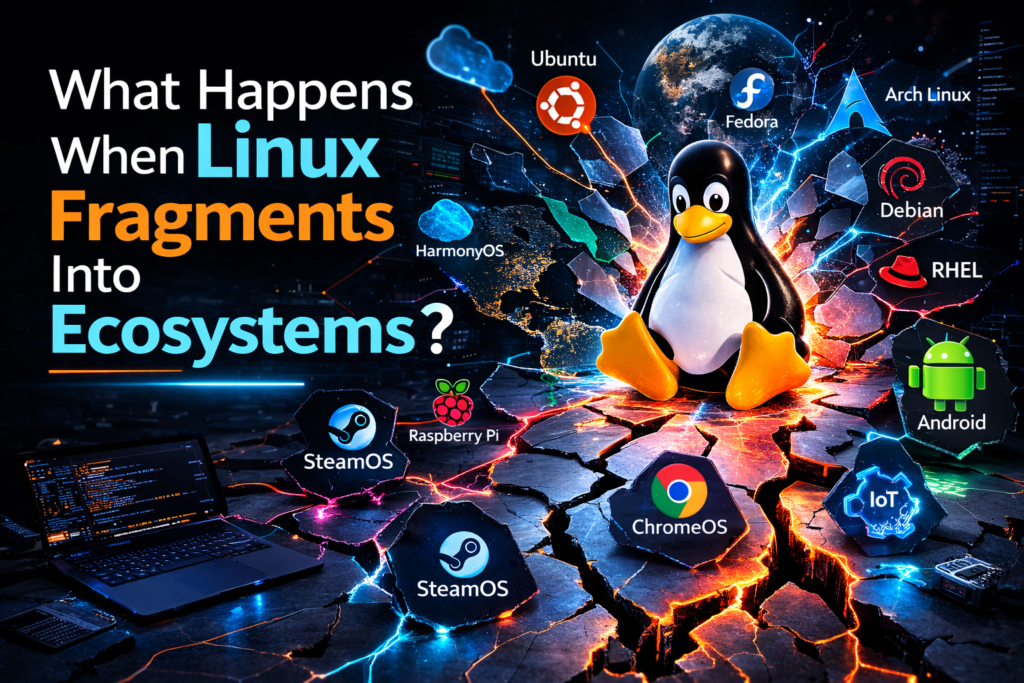
👉 What Happens When Linux Fragments Into EcosWhat Happens When Linux Fragments Into Ecosystems?ystems?
Why This Matters Going Forward
If Android were truly “Google-owned,” HarmonyOS wouldn’t exist.
If Linux weren’t open, Android itself wouldn’t exist.
HarmonyOS proves a few uncomfortable truths:
- Ecosystem control matters more than kernels
- Services are more powerful than operating systems
- Dependency is a strategic risk
Whether HarmonyOS succeeds globally or not, it has already changed the landscape by proving that alternatives are viable.
And the next battleground isn’t phones anyway.
That future-facing comparison is covered here:
👉 HarmonyOS vs Android: The Real Battle Isn’t Phones
Final Thoughts
Android was never Google — it was Linux plus Google’s services.
HarmonyOS exists because Huawei understood that distinction earlier than most. It’s not an anti-Android move; it’s an anti-dependency move.
In a world increasingly shaped by ecosystems rather than devices, that difference matters more than branding ever did.
Further Reading
If you want to explore this topic more deeply from different perspectives:
- Linux Foundation — open-source operating system fundamentals
- Android Open Source Project (AOSP) — how Android is structured beneath Google services
- Huawei Developer Documentation — HarmonyOS architecture and distributed design