Why HarmonyOS Matters: Android, Linux, and the Future of Tech Competition
For years, we’ve treated mobile operating systems as a two-horse race: Android and iOS. But that framing misses something important. Android itself was never a single thing, and it was never purely “Google.” Underneath the branding, Android has always been built on Linux — an open foundation layered with proprietary services and ecosystem control.
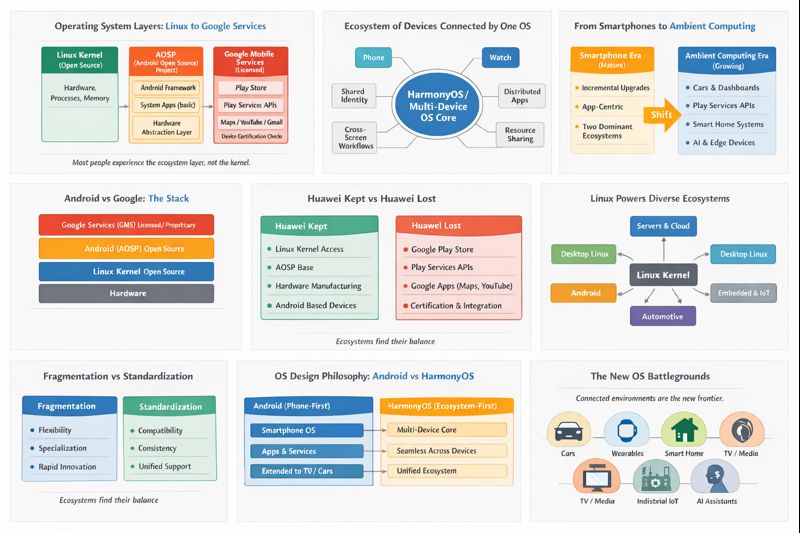
That distinction matters more than ever today, because it’s exactly where HarmonyOS enters the picture.
HarmonyOS isn’t just Huawei’s response to being cut off from Google. It’s a serious attempt to rethink how operating systems work across phones, cars, wearables, homes, and future AI-driven devices. Whether you like Huawei or not, the existence of HarmonyOS signals something bigger: real competition is returning to operating systems, and that’s a good thing.
This article sets the stage for why HarmonyOS matters, how Android actually works under the hood, and why the next OS battle won’t be about phones at all.
Android Was Never Just Google
Most people think Android is Google. Technically, that’s not true.
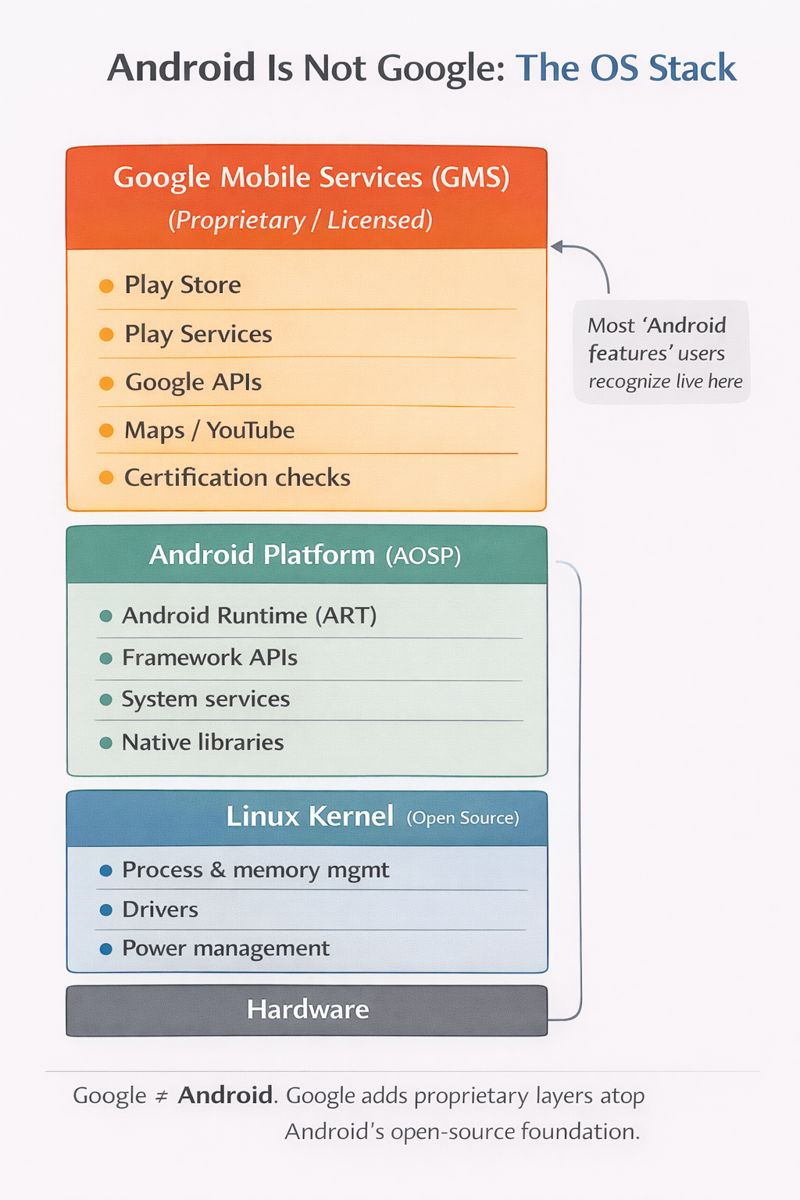
At its core, Android runs on the Linux kernel. That layer is open-source and shared across countless systems, from servers to routers to embedded devices. On top of that sits AOSP (Android Open Source Project), which is also open.
What makes modern Android feel like Google is everything layered above that:
- Google Play Services
- The Play Store
- Gmail, Maps, YouTube
- SafetyNet and certification checks
Those services are proprietary, licensed, and tightly controlled by Google.
This is why Huawei losing Google access didn’t mean losing Linux or Android entirely — it meant losing the ecosystem glue.
If you want a deeper breakdown of that separation, this is covered fully in the cluster post:
👉 Android Was Never Google — So Why HarmonyOS Matters
HarmonyOS Is an Ecosystem Play, Not a Phone OS
HarmonyOS, developed by Huawei, is often misunderstood as “Android without Google.” That was true in early versions, but it’s no longer the whole story.
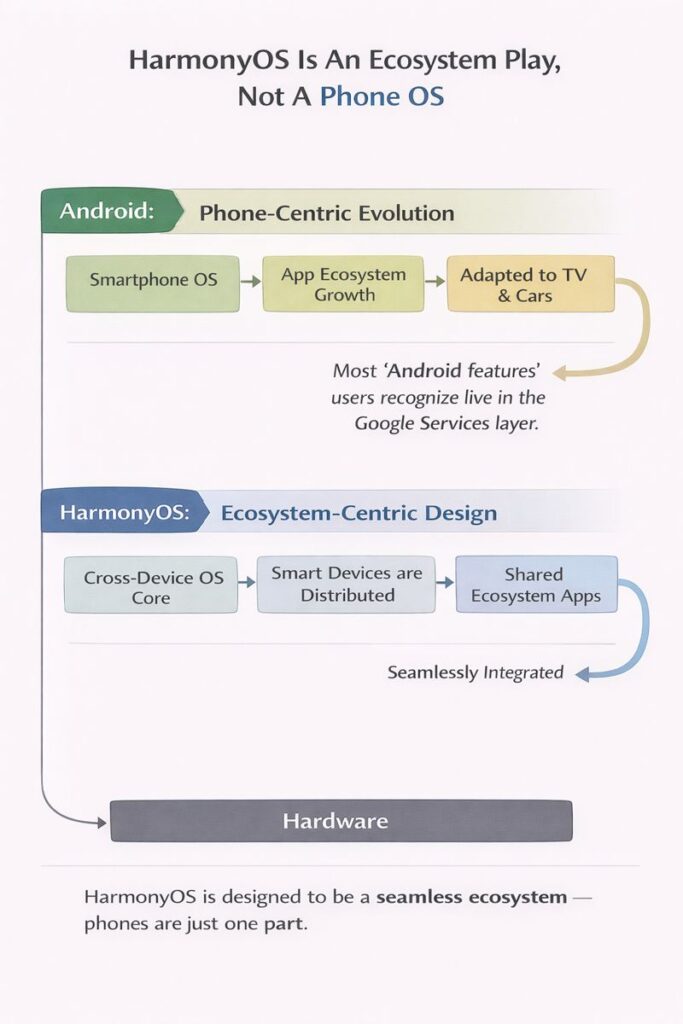
Huawei’s long-term goal isn’t to replace Android on phones alone. It’s to create a distributed operating system — one that treats phones, tablets, TVs, cars, wearables, and smart home devices as parts of a single system.
Instead of each device running a siloed OS:
- Apps can move between screens
- Devices can share resources
- One OS scales across form factors
This idea becomes much more powerful outside smartphones, where Android and iOS were never designed to dominate.
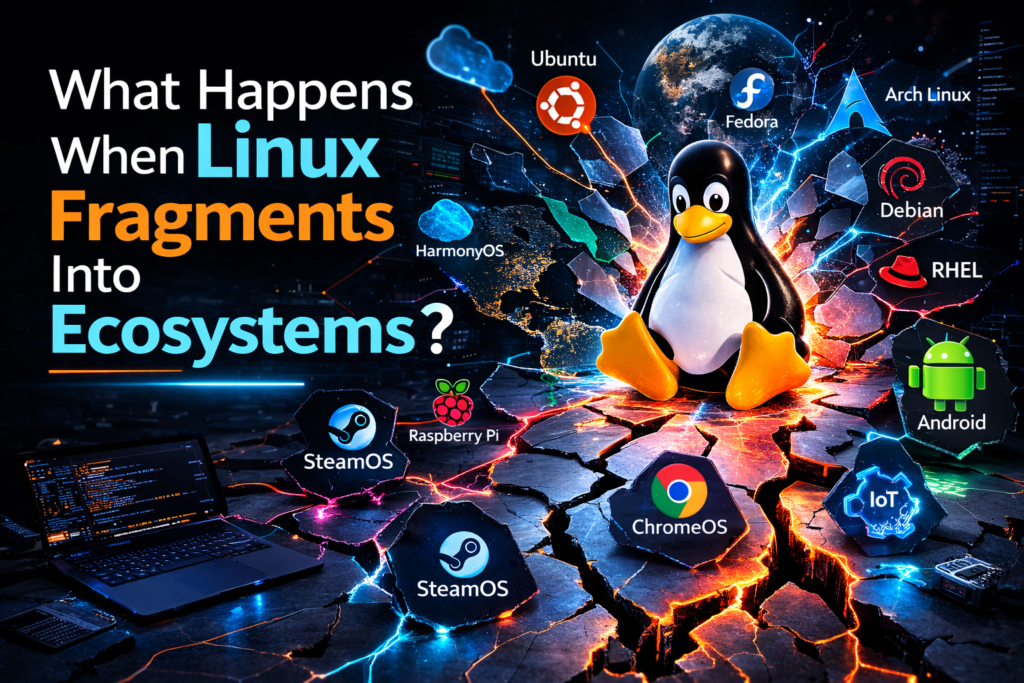
Linux Fragmentation Isn’t a Bug — It’s the Point
One common criticism is that Linux has “fragmented” too much. Android, ChromeOS, embedded Linux, HarmonyOS — all different, all incompatible in places.
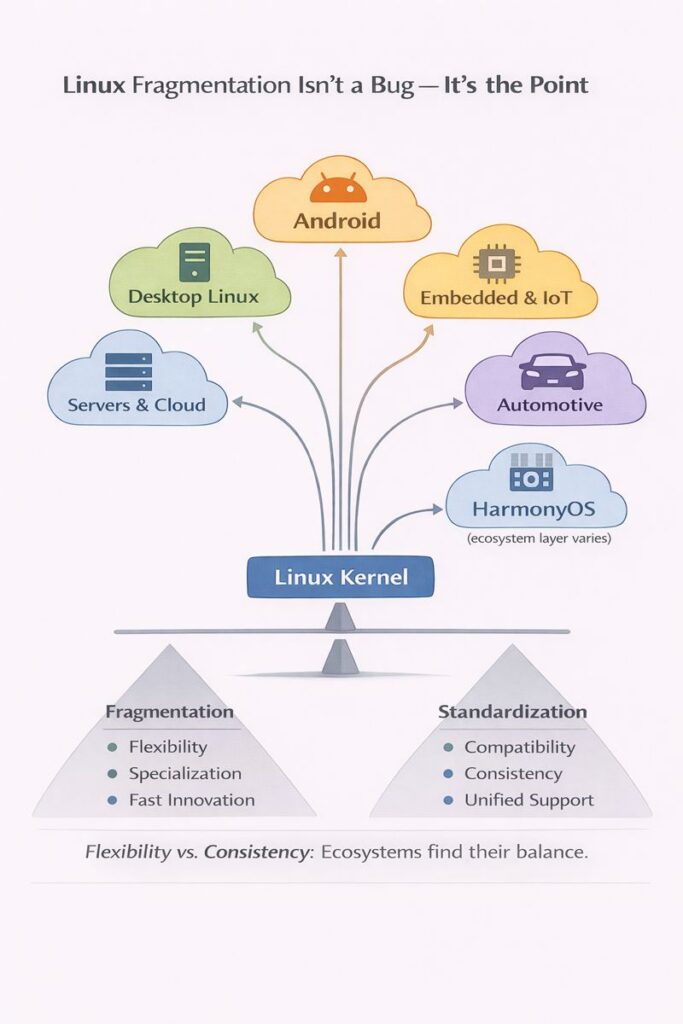
But fragmentation didn’t kill Linux. It made it unstoppable.
Linux today:
- Runs most of the internet
- Powers Android phones
- Dominates cloud infrastructure
- Lives inside cars, TVs, routers, and industrial systems
HarmonyOS fits this pattern. It’s another branch growing from a shared foundation, optimised for a different future.
If you’re interested in the long-term implications of this, the systems-level view is explored here:
👉 What Happens When Linux Fragments Into Ecosystems?
The Real Battle Isn’t Phones Anymore
Smartphones are mature. Improvements are incremental. The real growth areas are elsewhere:
- Cars and in-vehicle systems
- Wearables and health devices
- Smart homes
- AI-powered assistants and ambient computing
This is where operating systems quietly become more important than hardware.
Android is adapting to this future, but it’s still phone-first by design. HarmonyOS, by contrast, was built with multi-device coordination at its core. That difference may not matter much today — but it matters a lot over the next decade.
A forward-looking comparison between the two ecosystems is covered here:
👉 HarmonyOS vs Android: The Real BaHarmonyOS vs Android: The Real Battle Isn’t Phonesttle Isn’t Phones
Why Competition in Operating Systems Matters
When operating systems stagnate, innovation slows and users lose leverage. For years, mobile OS development has been dominated by two US-centric ecosystems with little external pressure.
HarmonyOS changes that dynamic.
Even if it never dominates Western smartphones, it:
- Forces Android to evolve
- Proves alternatives can survive without Google
- Reduces reliance on a single tech stack
- Encourages regional and ecosystem diversity
In the long run, that benefits everyone — developers, manufacturers, and users.
Final Thoughts
HarmonyOS doesn’t need to “win” to matter. It only needs to exist, grow, and challenge assumptions.
Android was never just Google. Linux was never just one operating system. And the future of computing won’t revolve around phones alone.
HarmonyOS is a reminder that technology ecosystems are choices, not inevitabilities — and competition is how progress actually happens.
Further Reading
If you want to explore this topic more deeply from different perspectives:
- Linux Foundation — open-source operating system fundamentals
- Android Open Source Project (AOSP) — how Android is structured beneath Google services
- Huawei Developer Documentation — HarmonyOS architecture and distributed design
Frequently Asked Questions:
Is HarmonyOS based on Linux?
Yes. HarmonyOS uses Linux-based components in parts of its architecture, particularly in earlier and compatibility-focused versions. Newer versions also introduce Huawei’s own kernel and frameworks, allowing HarmonyOS to operate independently from Android while still benefiting from Linux’s stability and performance.
Is Android owned by Google or is it open source?
Android itself is built on the Linux kernel and the Android Open Source Project (AOSP), which are open source. However, most Android phones rely heavily on proprietary Google services such as Google Play Services, Maps, and the Play Store, which are controlled and licensed by Google.
Why did Huawei create HarmonyOS instead of using Android?
Huawei created HarmonyOS to reduce dependency on Google-controlled services and to build a unified operating system that works across phones, tablets, wearables, cars, and smart home devices. HarmonyOS is designed as a long-term ecosystem platform rather than a phone-only operating system.
Can HarmonyOS replace Android globally?
HarmonyOS does not need to replace Android globally to be successful. Its primary strength lies in ecosystem integration and multi-device coordination, particularly in markets and device categories where Huawei has strong hardware presence. Android and HarmonyOS can coexist while serving different strategic goals.
Why does Linux fragmentation not kill operating systems?
Linux fragmentation allows the same core technology to be adapted for different use cases, such as servers, smartphones, embedded systems, and distributed platforms. This flexibility is one of Linux’s greatest strengths and is why it underpins so many modern operating systems, including Android and HarmonyOS.
Is the future of operating systems moving beyond smartphones?
Yes. Much of the future growth in operating systems is happening in cars, wearables, smart homes, and AI-powered devices. Operating systems that can coordinate multiple devices seamlessly will have an advantage over those designed primarily for smartphones.