Space Telescopes: Unlocking the Secrets of the Universe
Introduction
Every discovery begins with a look beyond our own sky.
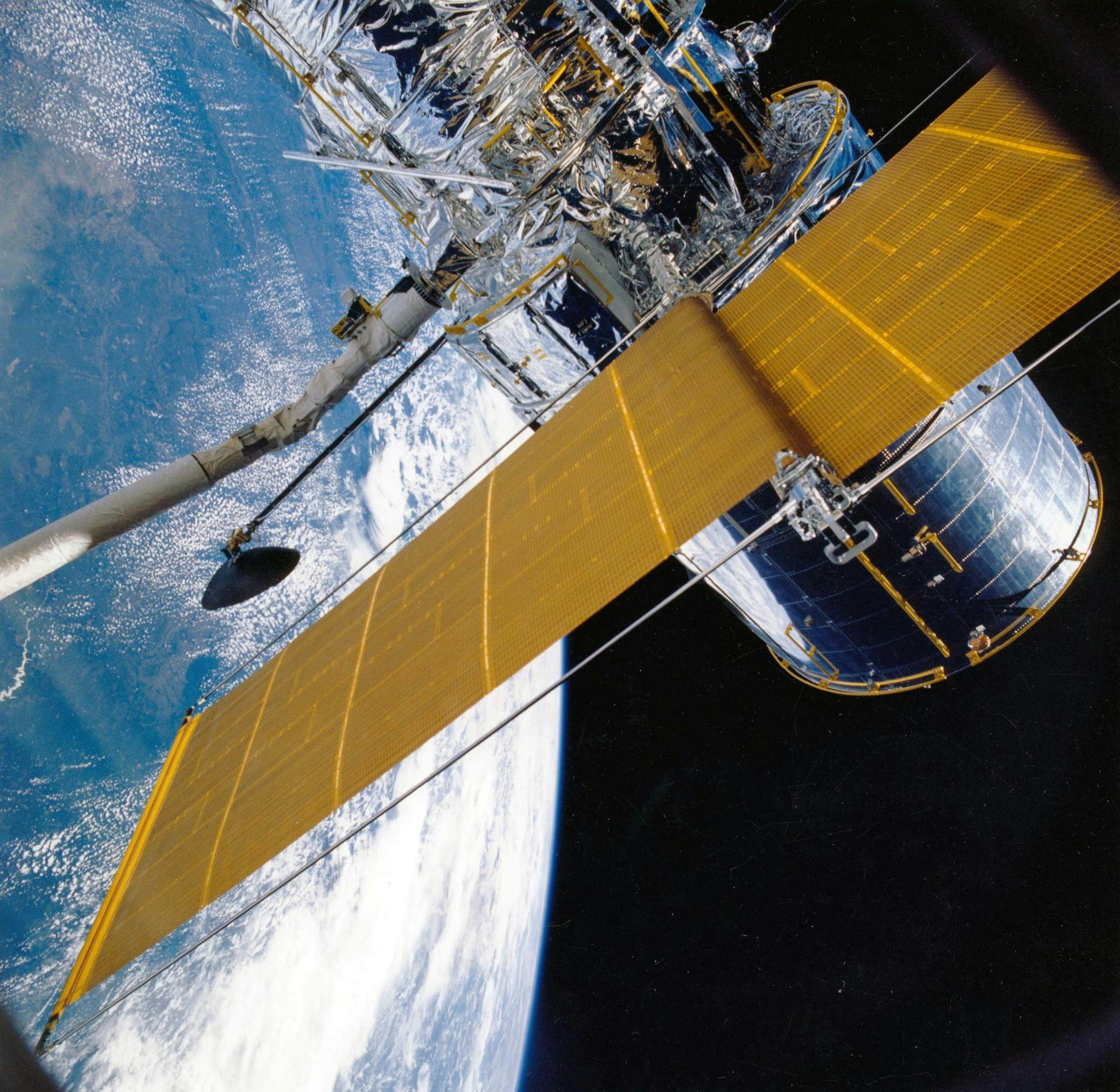
Space telescopes are humanity’s ultimate windows into the cosmos — instruments that have revealed galaxies, planets, and phenomena we never knew existed.
From the Hubble Space Telescope’s iconic images to the infrared revelations of James Webb, these orbiting observatories are transforming how we understand our universe.
And now, powered by AI and next-generation robotics, space telescopes are entering a new era of autonomous discovery.
💫 Related reading: Exploring the Universe: How AI and Robotics Are Revolutionizing Space Exploration
The Birth of Space-Based Observation
Before space telescopes, astronomers relied on ground-based observatories limited by weather, light pollution, and Earth’s atmosphere.
The launch of Hubble in 1990 changed everything.
Orbiting above the atmosphere, Hubble captured unprecedented detail — from star-forming nebulae to the birth and death of galaxies.
Hubble proved that space observation could do what no ground telescope ever could: deliver clarity, consistency, and cosmic perspective.
💫 Further reading: The Evolution of Space Stations: From Skylab to Commercial Platforms
The James Webb Era: Seeing in Infrared
In 2021, the James Webb Space Telescope (JWST) began rewriting the rules of astronomy.
Unlike Hubble’s visible-light imaging, Webb observes in infrared, allowing it to peer through dust clouds and see the earliest light from the universe’s first galaxies.
JWST’s instruments are so precise they can analyze the atmospheres of exoplanets, detecting potential signs of life — water vapor, methane, and carbon dioxide — from hundreds of light-years away.
💫 See also: Exploring the Moon and Mars: Building a Future Beyond Earth
This telescope represents not just a new lens on the cosmos but a glimpse into our origins and future.
AI and Automation: The New Frontier in Astronomy
The next generation of telescopes won’t just capture data — they’ll analyze it.
Modern astronomy now generates terabytes of data daily, far too much for human scientists to process manually.
That’s where artificial intelligence steps in.
AI algorithms trained on massive datasets can detect anomalies, classify galaxies, and even predict stellar behavior.
NASA’s HelioLinc3D recently discovered a new asteroid using automated sky-survey data — the same technology could one day identify habitable worlds in real time.
💫 Related post: AI Mission Control: How Intelligent Systems Navigate the Stars
Future missions like NASA’s Nancy Grace Roman Space Telescope and ESA’s Euclid will rely on autonomous AI-assisted targeting to prioritize the most promising cosmic events.
Robotic Maintenance and In-Space Assembly
One challenge of large telescopes is their size — building and maintaining them in orbit isn’t easy.
That’s changing with robotic assembly and servicing missions.
Robots will soon construct and maintain telescopes directly in space, replacing the need for massive Earth launches.
Projects like DARPA’s Orbital Express and NASA’s Restore-L are testing robotic refueling and repairs, while modular concepts like Starshade and LUVOIR envision telescope components that can be launched separately and assembled autonomously in orbit.
💫 Further insight: Satellites: The Hidden Infrastructure Powering Our Connected World
Discovering Exoplanets and Habitable Worlds
AI-enhanced telescopes have already identified thousands of exoplanets — some within the so-called habitable zone, where conditions could support liquid water.
Future instruments like LUVOIR and HabEx could directly image Earth-like worlds around distant stars.
Each discovery brings us closer to answering the ultimate question: Are we alone?
The combined power of AI-driven observation, autonomous telescopes, and space-based laboratories may soon provide the answer.
💫 Related reading: Asteroids, Mining, and the Next Frontier of Space Resources
The Next Era: Quantum and AI Hybrid Observatories
Looking even further ahead, scientists are exploring quantum imaging and AI co-observation networks — telescopes that share and interpret data collaboratively across space and Earth.
Imagine a constellation of AI-controlled telescopes operating like a neural network, learning from each observation to refine the next.
This “cognitive astronomy” could transform not only what we see but how we understand the universe itself.
💫 Further reading: Exploring the Universe: How AI and Robotics Are Revolutionizing Space Exploration
This topic is part of our complete guide to AI in Space Exploration.
Conclusion
From Hubble to Webb and beyond, space telescopes have reshaped humanity’s view of existence.
Each leap in technology — from optics to AI — has peeled back another layer of the cosmic mystery.
In the decades ahead, intelligent, autonomous observatories will not only observe the universe but participate in its discovery.
These machines will be our eyes among the stars — watching, learning, and revealing the secrets of the cosmos.