The Evolution of Space Stations: From Skylab to Commercial Platforms
Introduction
For over half a century, space stations have been humanity’s laboratories among the stars — places where we’ve learned to live, work, and thrive in microgravity.
From the early days of Skylab to the cutting-edge plans for commercial platforms orbiting Earth and the Moon, each station has marked a step forward in our journey to become a spacefaring civilization.
💫 Related reading: Exploring the Universe: How AI and Robotics Are Revolutionizing Space Exploration
Skylab: The First American Space Station
Launched in 1973, Skylab was the United States’ first space station — a converted Saturn V rocket stage that housed astronauts for up to 84 days.
It was an experiment in long-duration living in space, testing solar panels, waste systems, and early life support tech.
Skylab provided vital data on bone loss, muscle atrophy, and human adaptation — research that would guide the design of all future stations.
Although short-lived, Skylab’s success proved that humans could work productively in orbit for months at a time, paving the way for international cooperation and larger, modular stations.
The International Space Station: A Global Laboratory
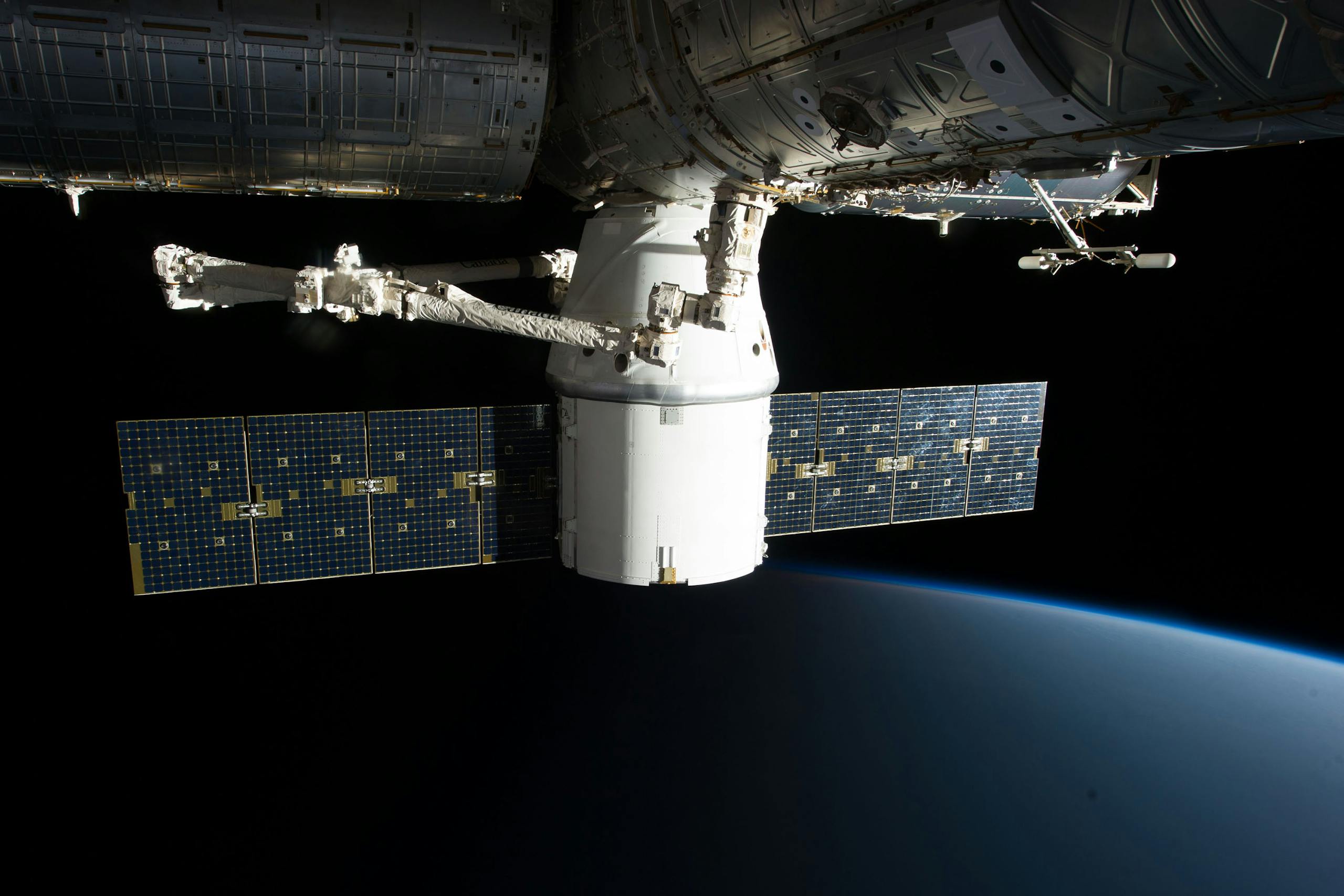
The International Space Station (ISS), launched in 1998, remains one of humanity’s greatest engineering achievements.
A collaboration between NASA, Roscosmos, ESA, JAXA, and CSA, it represents two decades of peaceful cooperation above Earth.
The ISS has hosted more than 250 astronauts from 20 nations and continues to produce groundbreaking science — from studying microgravity’s impact on the human body to developing new materials, medicines, and agricultural methods.
💫 Related post: Exploring the Moon and Mars: Building a Future Beyond Earth
The station also serves as a testing ground for AI-assisted robotics, such as the Astrobee system — small cube-shaped robots that navigate autonomously, performing maintenance and inspections.
The Rise of Commercial Space Stations
As the ISS approaches retirement, the next era of space habitation will be privately built and managed.
Companies like Axiom Space, Blue Origin, and Voyager Space are leading the charge with modular commercial stations designed for research, tourism, and manufacturing.
Axiom’s station will initially attach to the ISS before becoming fully independent, while Blue Origin’s Orbital Reef aims to create a “business park in space.”
These stations will host governments, private enterprises, and scientists — ushering in a mixed economy in low-Earth orbit.
💫 Further reading: Satellites: The Hidden Infrastructure Powering Our Connected World
Modular and AI-Enhanced Architecture
Future space stations will be designed around modularity, automation, and self-repair.
AI systems will manage life support, power, and communications, while robotic arms and drones will handle external maintenance and assembly.
NASA’s upcoming Lunar Gateway — part of the Artemis program — embodies this concept.
It will orbit the Moon, serving as a logistics and refueling hub for lunar missions and, eventually, crewed Mars flights.
💫 Related post: AI Mission Control: How Intelligent Systems Navigate the Stars
Sustainability and Next-Gen Life Support
Long-term human presence in space depends on closed-loop ecosystems.
Modern stations recycle air, water, and waste — turning what was once a logistical nightmare into a self-sustaining cycle.
Radiation shielding, modular solar arrays, and artificial gravity concepts are also in development to improve astronaut health and safety.
💫 See also: Asteroids, Mining, and the Next Frontier of Space Resources
Looking Toward the Future
The space stations of the coming decades won’t just orbit Earth — they’ll orbit the Moon, Mars, and even asteroids.
They’ll serve as scientific labs, industrial hubs, and stepping stones to deeper space.
Artificial intelligence and robotics will ensure safety, efficiency, and autonomy — allowing humans to focus on exploration and innovation.
The dream of a permanent human presence beyond Earth is no longer fantasy — it’s the blueprint for the next phase of civilization.
💫 Further Reading: Space Telescopes: Unlocking the Secrets of the Universe