Satellites: The Hidden Infrastructure Powering Our Connected World
Introduction
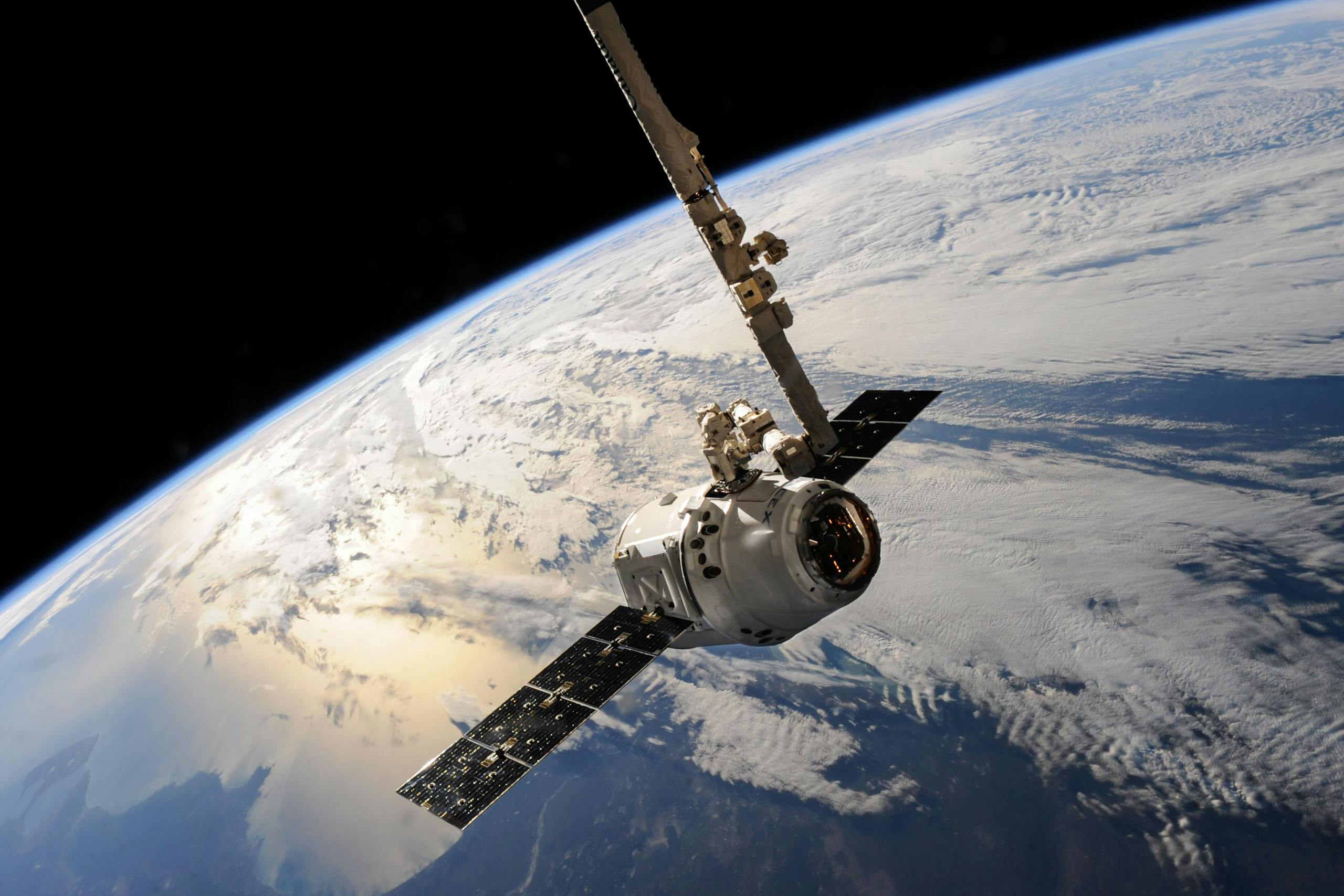
Every message, map, forecast, and financial transaction on Earth relies on a network you rarely see — satellites. Orbiting hundreds of miles above us, these silent machines form the invisible backbone of our connected civilization. But as our dependence on space infrastructure grows, so does the complexity of maintaining and protecting it.
AI and automation are quietly transforming this world above the clouds, reshaping how satellites communicate, repair, and even build each other.
💫 Related reading: Exploring the Universe: How AI and Robotics Are Revolutionizing Space Exploration
The Rise of a Connected Planet
There are now over 10,000 active satellites orbiting Earth, and that number is accelerating fast. What began as Cold War competition has evolved into an ecosystem powering global navigation, streaming, agriculture, finance, and disaster response.
From GPS satellites guiding autonomous vehicles to weather satellites predicting climate shifts, every signal we rely on starts far above our heads. Yet, as this infrastructure grows denser, managing it from the ground becomes increasingly difficult.
Enter AI-driven satellite operations — systems that monitor, optimize, and safeguard the orbital highways where our modern life runs.
AI in Orbital Traffic Management
Space is getting crowded. Thousands of satellites, debris fragments, and new mega-constellations like Starlink and OneWeb orbit at different altitudes, moving at speeds of over 17,000 mph.
To prevent collisions, ground control now uses machine learning algorithms that predict trajectory overlaps days in advance. NASA’s Conjunction Assessment Risk Analysis (CARA) and ESA’s Space Traffic Management AI can automatically recommend avoidance maneuvers — a critical innovation as human teams can’t manually track everything anymore.
💫 Related reading: AI Mission Control: How Intelligent Systems Navigate the Stars
Smarter Satellites: Automation in Orbit
The new generation of satellites is no longer passive — they’re self-learning platforms.
Modern spacecraft use AI-powered diagnostics to detect faults, reroute power, and adjust positioning automatically.
Companies like Northrop Grumman and Orbit Fab are pioneering satellite servicing missions, where robotic spacecraft refuel or repair others in orbit. These missions rely on computer vision and AI navigation to dock precisely with targets moving at thousands of kilometers per hour.
And when things go wrong, AI doesn’t just fix — it prevents. Predictive algorithms flag anomalies in data streams before failures happen, extending operational lifetimes by years.
The Future of In-Space Networking
Soon, satellites won’t just talk to Earth — they’ll talk to each other.
Researchers are building inter-satellite AI communication networks, allowing clusters of spacecraft to share data, relay signals, and coordinate routes dynamically.
This creates what’s being called the “Internet of Space” — an orbital web where intelligent nodes collaborate, learn, and optimize in real time.
ESA’s HydRON project and NASA’s LaserComm AI links are already demonstrating this concept, bringing fiber-optic-like speeds to orbit.
💫 Related reading: The Evolution of Space Stations: From Skylab to Commercial Platforms
Space Sustainability: Cleaning Up the Skies
All this innovation brings a new challenge — space junk.
Defunct satellites, spent rocket stages, and debris from past missions now threaten active spacecraft. AI solutions are leading the cleanup.
Autonomous debris-removal satellites from Astroscale and ClearSpace use object-recognition AI to identify, capture, and deorbit defunct hardware safely. Over time, such systems may make low-Earth orbit self-cleaning — a vital step if we want space to remain open for exploration and communication.
💫 Related reading: Asteroids, Mining, and the Next Frontier of Space Resources
The Economics of Orbit
The satellite industry isn’t just about science — it’s a multi-billion-dollar economy.
AI is helping optimize insurance modeling, mission planning, and resource allocation across hundreds of commercial operators. With in-orbit manufacturing and servicing on the rise, satellites are becoming both tools and factories — building the next generation of space infrastructure directly in orbit.
💫 Related reading: Space Telescopes: Unlocking the Secrets of the Universe
Conclusion
Satellites are no longer silent steel boxes in orbit. They’re becoming intelligent, self-governing entities — the nervous system of our planet. From disaster response to global connectivity, they make modern life possible. And with AI guiding their operations, we’re entering an era where space infrastructure maintains itself — quietly, efficiently, and constantly expanding our reach beyond Earth.
💫 Further Reading: