AI Mission Control: How Intelligent Systems Navigate the Stars
Introduction
Behind every spacecraft, rover, and satellite lies a silent genius — artificial intelligence. Once a support tool, AI has now become the mission control of modern space exploration. From piloting spacecraft to managing communications across billions of miles, intelligent systems are redefining what’s possible beyond Earth.
The Rise of Autonomous Mission Control
Traditional mission control centers are full of human specialists monitoring telemetry, guiding trajectories, and analyzing every anomaly. But with missions venturing deeper into space, communication delays — sometimes exceeding 40 minutes — make manual control impossible.
Enter AI mission control: systems capable of making split-second decisions without human input.
NASA’s Deep Space Network now integrates machine learning to predict signal degradation, reroute transmissions, and adjust antenna positions automatically. Meanwhile, autonomous spacecraft like ESA’s SMART-1 and NASA’s DART use onboard AI to correct their own flight paths mid-mission — without waiting for Earth’s approval.
Smarter Navigation Across the Solar System
AI’s role in spacecraft navigation has become critical. Instead of relying solely on pre-programmed routes, today’s probes use neural networks to analyze star patterns and gravitational fields in real time.
- Optical navigation AI helps spacecraft recognize celestial landmarks to reorient autonomously.
- Reinforcement learning algorithms simulate millions of trajectory options to select the most fuel-efficient route.
- Predictive control systems adjust propulsion based on real-time sensor feedback — reducing human workload and risk.
💫 Related reading: Exploring the Universe: How AI and Robotics Are Revolutionizing Space Exploration
Managing Robotic Fleets and Swarm Systems
Future missions won’t rely on a single spacecraft but swarms of intelligent robots working together. AI mission control already manages coordinated fleets:
- On Mars, multiple rovers share mapping data through a distributed AI network.
- Around Earth, constellations like Starlink and OneWeb use AI to prevent satellite collisions by dynamically adjusting orbits.
- NASA’s proposed Interplanetary Internet envisions AI managing bandwidth, routing, and priority between dozens of deep-space missions simultaneously.
These self-governing systems mark the beginning of machine-led collaboration — a model that mirrors the teamwork once exclusive to human crews.
Fault Detection and Predictive Maintenance
Spacecraft can’t pull over for repairs — which makes AI-based fault detection vital. Intelligent monitoring software now predicts component failure before it happens by analyzing vibration, temperature, and voltage data in real time.
When NASA’s Voyager 1 began sending garbled signals in 2022, AI tools helped engineers pinpoint the cause remotely, proving how indispensable predictive diagnostics have become.
💫 Related reading: Satellites: The Hidden Infrastructure Powering Our Connected World
The Future: Fully Autonomous Deep-Space Operations
The ultimate vision for AI mission control is a self-governing space network — capable of planning, executing, and optimizing missions across multiple worlds.
Imagine a Mars base where AI coordinates rovers, power systems, and communication arrays while monitoring astronaut health and environmental hazards — all in real time.
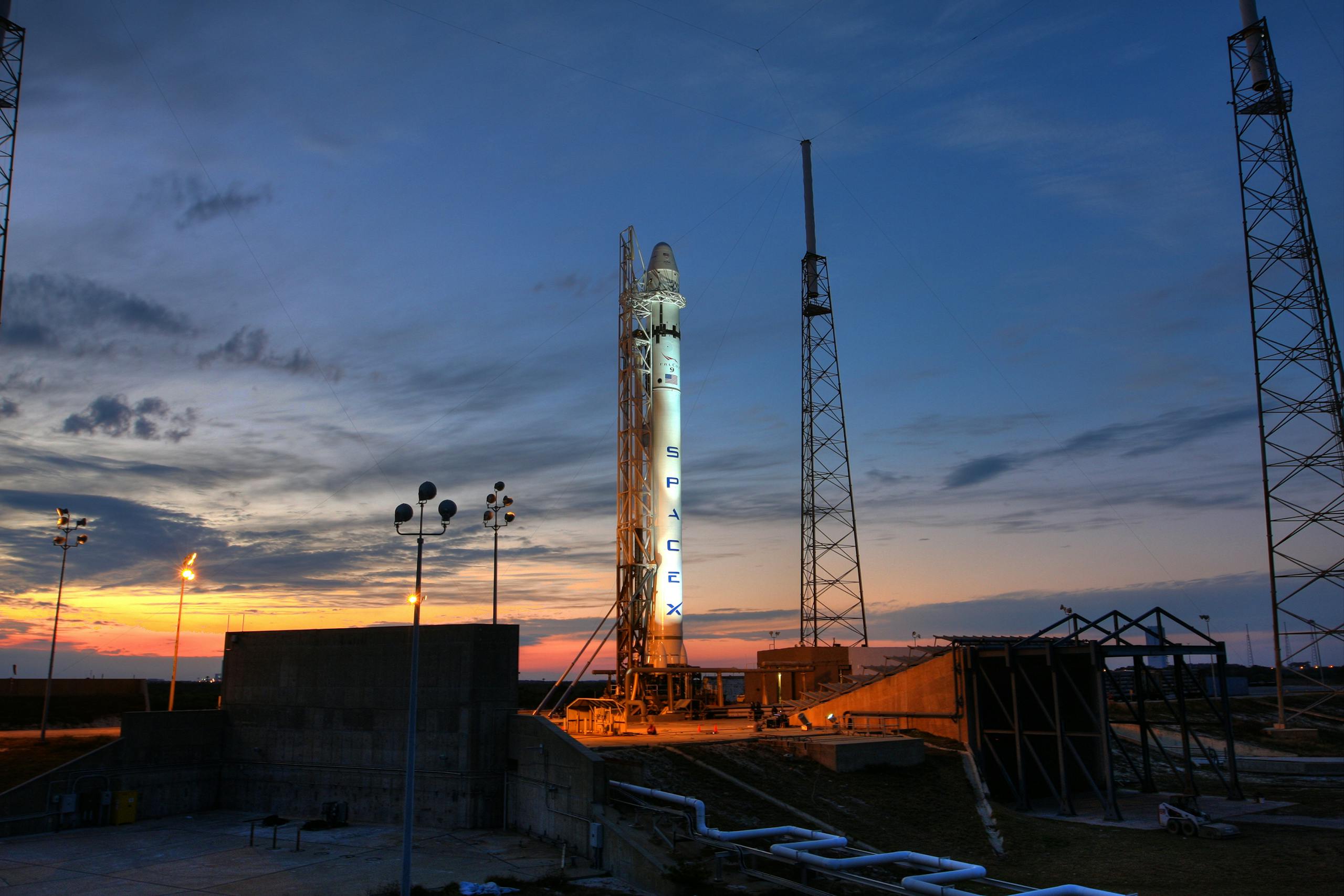
Private companies like Astroscale, GITAI, and SpaceX are already developing integrated AI systems to manage orbital logistics, refueling, and spacecraft docking autonomously. As hardware becomes more modular and data-driven, mission control may soon exist onboard the spacecraft itself.
The Human Touch
Even in this age of automation, the human role remains essential. Engineers, data scientists, and mission specialists design, train, and interpret these intelligent systems. Rather than replacing mission control teams, AI extends their reach — letting humanity explore further, faster, and more safely than ever before.
Conclusion
AI mission control represents a profound shift: from human-led oversight to intelligent autonomy. As algorithms take on more responsibility in deep space, they become our partners in exploration — navigating, analyzing, and innovating far beyond where any human could go.
💫 Further Reading: